



Back to Articles
Mediterranean House Plans: Style, Features, and Design Guide

House Plans Online
August 17, 2025
Mediterranean house plans are an architectural style inspired by the sun-soaked coastal regions of countries like Spain, Italy, and Greece. With their signature red tile roofs, light stucco walls, arches, and courtyards, Mediterranean-style homes bring a classic Old World influence that remains highly popular in the U.S. today.
Origins and Popularity in the U.S. Market
Mediterranean architecture grew out of everyday coastal homes built to beat the heat and make outdoor living easy. The style made a big splash in the United States during the 1920s – the era of prosperity known as the Roaring ’20s. During this time, extravagant seaside villas, resorts, and luxury homes in California and Florida were built in the Mediterranean Revival fashion. The style even became associated with Hollywood glamour, as Mediterranean villas frequently appeared in films of the 1920s and were linked to the era’s rich and famous.
Early U.S. Mediterranean Revival was first seen in luxury hotels and resort estates, but it soon expanded to private residences during the 1920s building boom in Florida and California. The style slowed during the Depression of the 1930s, but in recent decades it has rebounded—especially in California, Florida, and the Southwest—where climate and culture favor its indoor-outdoor living and stucco-and-tile construction.
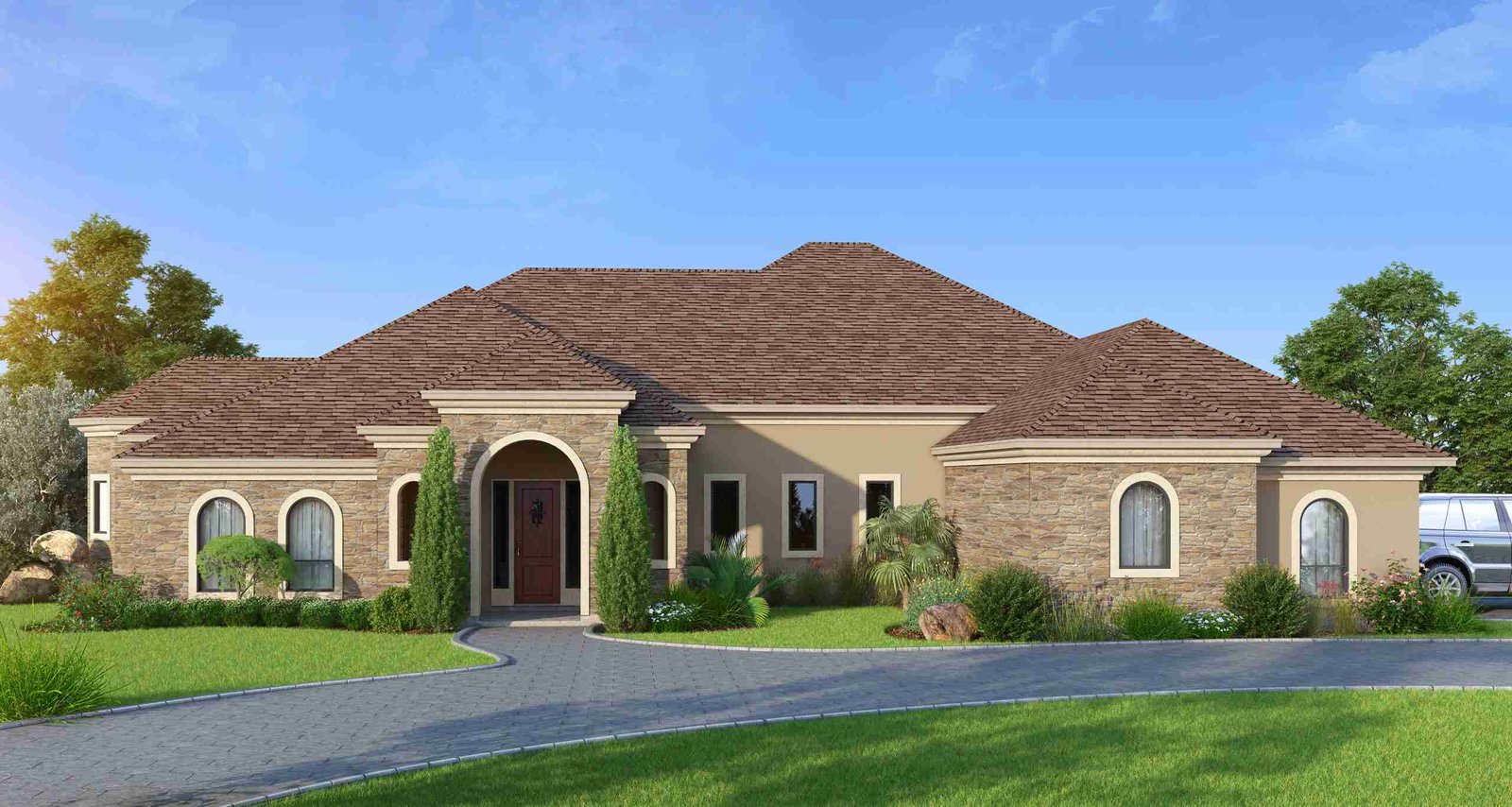
Mediterranean Plan 240-0168
Exterior Features of Mediterranean Homes
The hallmark features of Mediterranean house plans—such as clay roof tiles, light stucco facades, and graceful arches—reflect the influence of Spanish and Italian villas while giving these homes distinctive curb appeal.
Roofs
- Low-pitched hip roofs with red clay/terracotta “barrel” tiles that create a ridged profile.
- The curved clay tiles reflect sunlight, and the air space beneath them helps vent heat and reduce interior temperatures.
- Wide overhanging eaves add perimeter shade and protect walls and windows.
Walls & Facades
- Walls are typically finished in stucco or plaster, often in light, warm tones such as white, cream, beige, or soft pastels, which provide both durability and thermal performance.
- Some substyles add natural stone or brick accents for a more rustic look.
- Facades range from formal symmetry (Italian influence) to organic, asymmetrical compositions (Spanish influence).
Arches & Openings
- Frequent use of arches at entry doors, porch openings, and windows.
- Tall arched windows; grand arched entries sometimes paired with columns or pilasters.
- Balanced groupings of windows and doors create a cohesive elevation.
Ornamentation & Details
- Wrought-iron railings, balconies, grilles, and light fixtures.
- Juliet balconies are often placed at upper-level windows, adding architectural character and decorative appeal.
- Heavy wood front doors (often arched) and functional shutters for shade and privacy.
- Decorative tile (risers, fountains, door surrounds) adds color and regional character.
Materials & Palette
- Mediterranean homes typically use earthy, sun-friendly materials such as clay, stone, stucco, and wood, along with light color schemes that stay cooler and blend with the landscape.

Mediterranean Plan 240-0187
Interior Design and Layout Characteristics
Mediterranean interiors are designed for comfort and practicality, favoring open, breezy spaces, natural materials, and details drawn from Spanish and Italian influences.
- Plan & Flow: Open or semi-open layouts; great room, dining, and kitchen connect for everyday living and entertaining.
- Ceilings & Beams: High or vaulted ceilings often feature exposed, stained wood beams, which highlight the rustic Mediterranean character while adding architectural depth.
- Walls & Finish: Interior walls are often finished in plaster or stucco with a subtle texture, adding depth and character to the living spaces.
- Color Palette: Light neutrals (white, cream, sand) with accents like terracotta, cobalt, or olive in décor and tile.
- Flooring: Tile is common—terracotta, ceramic, travertine, or limestone—naturally cool underfoot in warm climates.
- Decorative Tile: Mosaic or Talavera patterns on floors, stair risers, backsplashes, or bath walls for artisan character.
- Wood Floors: Optional hardwood in select rooms; warmer or distressed finishes keep the look cohesive.
- Room Arrangement: Simple, uncluttered spaces with generous living areas and limited interior partitions.
- Bedrooms & Retreats: Spacious yet straightforward; many open to a balcony, loggia, or courtyard.
- Materials & Details: Abundant wood in ceilings, cabinetry, and furniture; wrought iron in lighting, railings, and screens.
- Focal Points: Substantial stone or plaster fireplaces are common focal points, both indoors and in covered outdoor areas, serving as central gathering spaces.
Outdoor Living in Mediterranean House Plans
Mediterranean house plans prioritize indoor–outdoor living with layouts that connect major rooms to patios, courtyards, and gardens. Many Mediterranean homes use U- or L-shaped footprints around a central courtyard—sometimes with a fountain, lush plantings, or a pool—for privacy and airflow. Covered outdoor living is standard: verandas, loggias, and covered porches provide shaded seating and dining, while balconies with wrought-iron railings extend second-floor spaces. Large French doors or modern sliding glass walls open great rooms and kitchens to terraces.
Landscaping reinforces the Mediterranean home design with citrus, palms, olives, herbs, and blooms like bougainvillea or lavender. Stone or terra-cotta pavers, urns, and water features complement the architecture, while many Mediterranean house plans also include an outdoor kitchen or built-in grill for alfresco entertaining. These features are climate-smart: courtyards and open-air atriums promote cross-ventilation, and deep eaves add shade to keep interiors cooler—key reasons Mediterranean-style homes thrive in the American Southwest, California, and Florida.

Mediterranean Plan 240-0195
Evolution Toward Modern Mediterranean House Plans
Modern Mediterranean house plans—often called Neo-Mediterranean—adapt classic Spanish and Italian influences for today’s lifestyles. They retain signature clay tile roofs and stucco walls but streamline ornamentation (fewer, bolder arches; simplified columns), update color palettes, and incorporate larger modern windows.
Contemporary Mediterranean-style homes also integrate smart home systems, energy-efficient appliances, and discreet solar panels (often paired with clay tile roofs). Enhanced insulation, insulated stucco systems, efficient HVAC, and double-paned windows broaden comfort beyond coastal climates, while reinforced roofing and impact-resistant windows boost resilience in hurricane regions. These homes often include gourmet kitchens with large islands, spa-like bathrooms, home theaters, fitness rooms, and flexible bonus spaces—modern amenities blended with the style’s crafted character.
Spanish Revival and Italian Renaissance Influences in Mediterranean Homes
Mediterranean architecture in the U.S. draws from multiple regional traditions, with Spanish Revival and Italian Renaissance being the most common. Each influence brings its own distinctive details:
Spanish Revival (Spanish Colonial)
- Clean stucco walls with minimal ornamentation
- Low-pitched barrel-tile roofs with deep eaves
- Occasional rounded towers or parapets
- Often single-story with rambling layouts
- Interiors may include heavy wood doors, exposed beams, and colorful Talavera or mosaic tile accents
Italian Renaissance (Tuscan)
- Symmetrical two-story facades
- Columned or pilastered entries with arched loggias
- Stone or cast trim details with slightly taller rooflines
- Terrace and balcony options
- Interiors often feature classical moldings and substantial stone fireplaces
Many Mediterranean house plans combine elements of both traditions, blending the rustic qualities of Spanish designs with the formality of Italian architecture.
Why Homeowners Love the Mediterranean Style
Resort-Like Ambiance
With sunny courtyards, breezy patios, and red tile roofs, Mediterranean house plans create the atmosphere of a resort. Their layouts emphasize relaxation and outdoor living while maintaining architectural sophistication.
Indoor–Outdoor Lifestyle
Mediterranean house plans connect living spaces to patios and courtyards. Large openings invite natural light and cross-breezes—ideal for California, Florida, and other warm regions, and adaptable in cooler climates.
Aesthetic & Curb Appeal
Rustic materials such as wood, clay, and stone, paired with arches, columns, and balconies, create distinctive elevations. Wrought-iron details and patterned tile add craftsmanship, giving Mediterranean house plans a recognizable and appealing look across both small villas and large estates.
Functional Luxury
Plans often feature first-floor master suites opening to gardens, guest casitas across a courtyard, and great rooms flowing to outdoor living. Many include gourmet kitchens, offices, wine storage, and flexible bonus rooms while keeping an easy one- or two-story layout.
Building Your Mediterranean Dream Home
If you’re considering building a new home in the Mediterranean style, you’ll be in good company. This architectural style has proven to be more than a passing trend – it adapts well to modern living and continues to be a popular choice among homeowners. As we’ve seen, Mediterranean house plans offer a blend of history and modernity: you can enjoy century-old design influence while benefiting from up-to-date features and construction.
Whether you prefer the casual, earthy character of Spanish Revival, the formality of an Italian villa, or a fusion of both, Mediterranean house plans offer many variations to fit different design preferences. Incorporating outdoor living areas such as courtyards, loggias, and covered patios helps maximize one of the style’s greatest strengths. Using authentic materials like clay tile roofing and high-quality stucco enhances durability and reinforces the architectural character. Details such as decorative tiles, wrought-iron features, and Mediterranean-inspired landscaping help reinforce the authenticity of the style.