



Back to Articles
Farmhouse House Plans: A Timeless Home Design Style

House Plans Online
July 8, 2025
Farmhouse house plans draw inspiration from the simple, rustic homes of early American farms. This enduring style appeals to homeowners for its mix of practicality, comfort, and old-fashioned charm. Common features include wraparound porches, steep gabled roofs, and large windows that bring in plenty of natural light. Floor plans typically offer open living areas, spacious kitchens, and cozy gathering spaces—creating a warm, family-friendly environment ideal for everyday life and entertaining.
Origins and Evolution of the Farmhouse Style
The farmhouse style originated from the rural lifestyles of the 18th and 19th centuries, when settlers built sturdy, functional homes using local materials and basic building techniques. These early houses prioritized utility—providing shelter, storage, and efficiency over decorative design.
They were often rectangular or L-shaped, with a central front door, simple rooflines, and two stories—living areas on the main floor and bedrooms above. One-story cottages were also common in some regions. Practical features like pitched roofs to shed rain and snow, and deep porches for shade and outdoor rest, became standard. By the mid-1800s, these elements had evolved into a recognizable American farmhouse style.
In the 20th century, the farmhouse gained renewed popularity as people embraced its simplicity, warmth, and connection to the past. Today’s farmhouse house plans are modern interpretations of this classic look—retaining traditional charm while offering updated features for contemporary living.
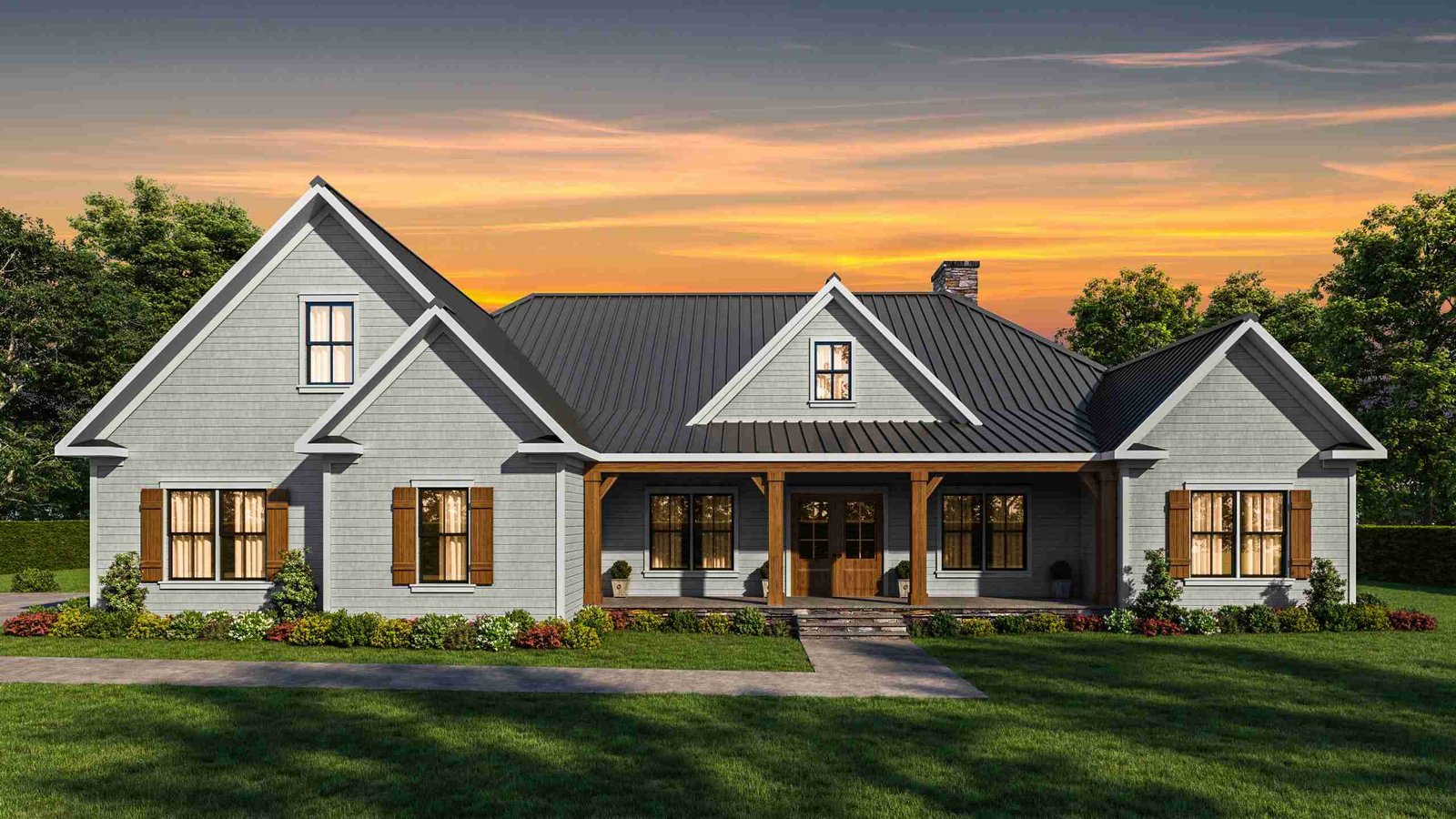
Farmhouse House Plan 110-0009
Exterior Characteristics of Farmhouse Homes
One of the most popular aspects of farmhouse house plans is their distinct country-charming exterior. Key exterior features of farmhouse homes include:
Large Covered Porches
Spacious front porches, often wrapping around the home, are a signature farmhouse feature. A large porch was originally used for removing muddy boots and storing firewood; now, these spaces offer inviting spots for rocking chairs, swings, and outdoor gatherings. Porches also add curb appeal while giving homeowners a place to enjoy sunsets and gentle breezes.
Steep Gabled Roofs
Farmhouse exteriors commonly showcase gabled roofs with steep pitches. These steep gables contribute to the farmhouse’s charming silhouette, along with helping rain and snow run off easily and providing ample attic space. Many farmhouse plans feature multiple gables or dormers, especially in larger designs, adding visual interest to the roofline.
Simple, Siding-Clad Facades
Farmhouse exteriors often feature clapboard or board-and-batten siding, sometimes accented with brick or stone at the foundation or chimney. They’re typically painted in neutral or light colors—classic white with contrasting shutters is the most familiar, though beige, gray, and muted earthy tones are also common. Trim details are usually simple, and shutters, once used for storm protection, now serve as charming decorative accents.
Ample Windows
Large windows are almost always present in farmhouse design, giving way to a bright, airy interior. Original farmhouses often had generously sized double-hung windows to maximize natural light and breezes. These windows still serve the same purpose today, adding sunlight, views, and natural ventilation.
Altogether, farmhouse exteriors combine symmetry, simplicity, and charm. A centered front door with evenly spaced windows creates a clean, balanced look, while details like a barn-style cupola or classic porch railings add personality. The result is a home that feels welcoming and timeless, whether it’s built on farmland or a suburban street.
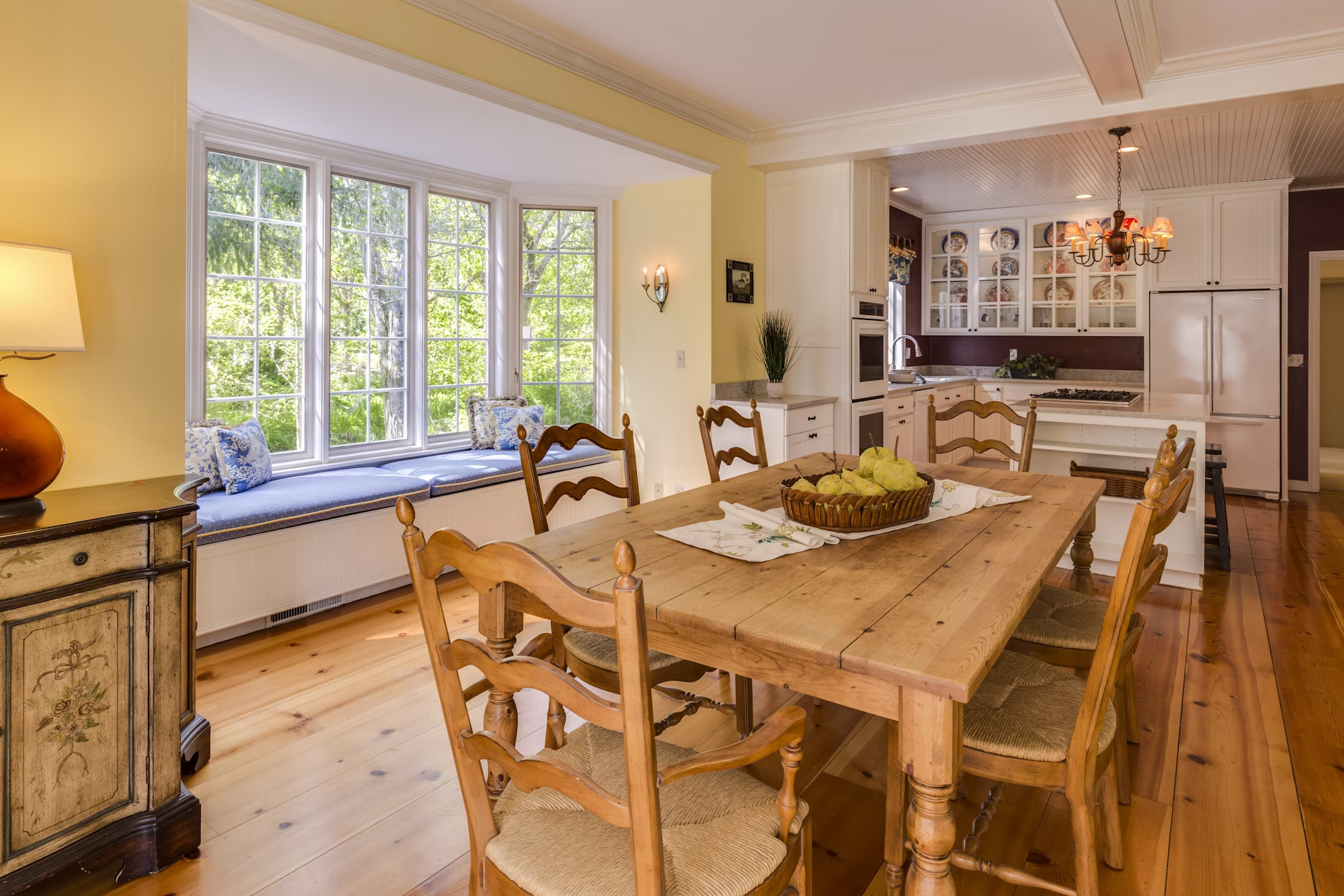
Photo by Francesca Tosolini on Unsplash
Interior Features and Layout of Farmhouse Plans
Farmhouse interiors reflect the same values as their exteriors—comfort, practicality, and timeless charm. Here’s what defines the inside of a farmhouse-style home:
Open and Functional Layout
Farmhouse floor plans are built for comfort and ease. Today’s designs carry forward the practical spirit of traditional layouts while adapting to modern needs. Key features include:
- Open-concept living areas with minimal walls between kitchen, dining, and living spaces
- Kitchen-centered layouts that reflect the farmhouse tradition of the kitchen as the heart of the home
- Private bedrooms and studies tucked away from main living areas for quiet retreat
- Side or rear entrances for shedding boots, coats, or bags—perfect for daily life
Spacious Country Kitchen
The kitchen is the heart of every farmhouse, designed for gathering and functionality. Common design elements include:
- Large dining areas for family meals and entertaining
- Central kitchen islands for prep, seating, and storage
- Apron-front sinks and wide plank wood floors as signature farmhouse details
- Simple wood cabinetry or open shelving for a clean, accessible look
- Modern appliances that blend seamlessly with vintage-inspired finishes
Warm, Rustic Materials and Finishes
Natural materials bring warmth and texture to farmhouse interiors. You’ll often see:
- Exposed wood beams on ceilings or framing interior spaces
- Wood flooring throughout most of the home
- Shiplap or beadboard paneling for added character
- Neutral colors like white, cream, and soft gray to keep spaces bright and natural elements in focus
- Stone or brick accents around fireplaces or on feature walls
Cozy Fireplaces and Focal Points
Many farmhouse house plans include a fireplace, often positioned in the living or family room as a central feature. Before modern HVAC, it provided essential heat and naturally became the heart of the home. Today, fireplaces continue to serve as cozy gathering spots, while other focal points—like a staircase with simple wood balusters or a built-in window seat—add character. Fireplace designs vary from classic stone or brick to more modern wood stove styles.
Vintage Accents with Modern Comforts
A big part of farmhouse appeal comes from blending old-world charm with today’s conveniences. Look for:
- Sliding barn doors as a nod to the style’s rural roots
- Lantern-style lighting or wrought-iron chandeliers for antique flair
- Distressed or handcrafted cabinets and furniture for a lived-in look
- Neutral furnishings and shiplap walls that balance comfort and rustic charm
- Smart features and media spaces integrated without disrupting the vintage feel
Together, these features create farmhouse interiors that are warm, functional, and full of personality—designed for real life and everyday comfort.

Farmhouse House Plan 630-0062
Why Farmhouse Plans Remain Popular Today
Farmhouse house plans remain in demand because they offer more than just good looks—they represent a way of living that’s comfortable, grounded, and timeless.
- Simple Living: Farmhouse homes reflect a relaxed lifestyle, with an emphasis on warmth, comfort, and connection to the outdoors.
- Timeless Style: Gabled roofs, wide porches, and natural materials create a classic look that feels nostalgic yet never goes out of style.
- Everyday Comfort: Open layouts, large kitchens, and flexible spaces make farmhouse plans well-suited for modern families.
- Strong Curb Appeal: Their welcoming exteriors and charming details continue to inspire homeowners across all settings, from rural lots to suburban streets.
Building a Farmhouse-Style Home: What to Know
If you are considering building a farmhouse house plan, here are five key things to keep in mind about this enduring and adaptable style:
1. Adaptable to Different Settings
Farmhouse homes may have started on rural farmland, but their appeal now extends far beyond the countryside. These plans work just as well in suburban neighborhoods, wooded lots, or even smaller properties in town. Their welcoming design looks right at home in a country meadow, a quiet cul-de-sac, or a tree-lined street. For narrow or compact lots, many farmhouse plans are thoughtfully designed to maintain their charm and function without needing a large footprint.
2. Flexible and Customizable Designs
Farmhouse plans come in a wide range of sizes and layouts, from under 1,500 square feet to more than 3,000 square feet. Whether you’re building a starter home or a forever home, there’s a farmhouse design to suit your needs. Their simple architecture also makes them easy to modify—add a mudroom, expand a kitchen, or upgrade finishes to make the home your own.
3. Modern Comfort and Efficiency
Building new gives you the vintage charm of a farmhouse with all the advantages of modern construction. Energy-efficient insulation, double-pane windows, and high-performance HVAC systems bring year-round comfort. You can also integrate smart-home features, solar panels, and durable modern materials that capture the classic look without the upkeep of old wood or stone.
4. Indoor-Outdoor Living
Farmhouse plans are known for their connection to the outdoors. Patios, screened-in spaces, and backyard gardens extend the living space and support a relaxed, nature-friendly lifestyle. Even small touches like a vegetable patch or a classic chicken coop can reinforce the farmhouse feel.
5. Timeless Style with Personal Touches
Farmhouse doesn’t mean cookie-cutter. From Southern farmhouse designs with two-story forms and deep wraparound porches to French farmhouse styles that bring rustic elegance with stone accents or arched doors, there’s plenty of room for personalization. Whether you lean classic or contemporary, you can tailor the look through layout choices, materials, and architectural details.
Whether you’re building on open farmland or a suburban lot, the farmhouse style adapts beautifully to modern life while preserving its inviting, down-to-earth character. It’s a design that continues to resonate across generations—simple, comforting, and made for making memories.