



Back to Articles
Elevation Drawings in House Plans: A Complete Guide

House Plans Online
March 25, 2025
When exploring house plans, you’ll often come across the term “elevation drawings,” which may not be familiar to many homebuyers. Simply put, an elevation drawing is a flat, two-dimensional view of one side of a house, as if you are looking directly at it. Unlike a floor plan, which provides a view from above, an elevation drawing presents the home from the side, without any perspective or depth distortion.
In a typical set of house plans in the U.S., you will find multiple elevation drawings showing the front, rear, and sides of the exterior. Some plans also include construction elevation room drawings for key spaces inside the home. These drawings are essential in home design and construction, serving to communicate the architect’s vision and guide the builder on-site. In this blog, we’ll explore what elevation drawings are, why they are important, how floor plan and elevation drawings work together, and the features of both exterior and interior elevation views.
What Are Elevation Drawings?
Elevation drawings are one of the essential types of architectural drawings, alongside plans and sections. An elevation is created on a vertical plane and shows what a building’s facade looks like from a straightforward viewpoint. In simpler terms, it is a scaled diagram of one exterior side of a house—such as the front, back, or a side—depicted as if you are standing directly in front of it.
Unlike a perspective sketch or photograph, an elevation is an orthographic projection; all features are flattened without any vanishing points or distortion from angles. This means that vertical lines remain vertical, and horizontal lines remain horizontal on the drawing, preserving true proportions. The result is a diagrammatic yet accurate portrayal of the building’s facade, displaying heights and widths to scale.
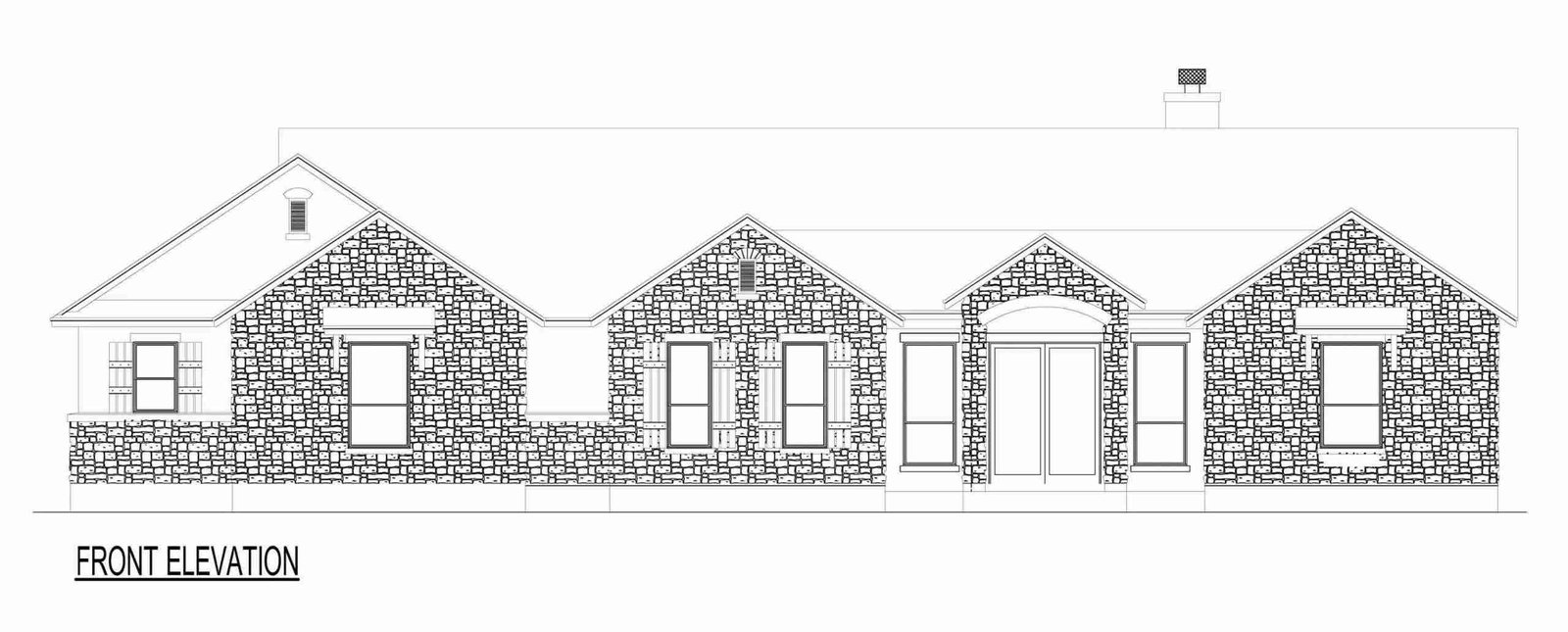
Plan 240-0056: Front Elevation
Elevation drawings focus on one side of the house at a time. For example, the front elevation presents a flat, scaled view of the home’s facade, including the entry door, porch, windows, garage door, and roofline. The rear elevation shows the back of the house, while side elevations—often labeled “left” and “right”—depict the home’s ends. Each drawing is a simplified, straight-on representation of what that side will look like when built. While these views don’t reflect how we naturally see a home in real life, they provide a clear and accurate reference for both design and construction.
Why Is There No Perspective in Elevations?
Elevations eliminate perspective to ensure that measurements remain accurate and are not distorted by distance. By “flattening” the view, the drawing keeps all elements at their true scale in relation to one another, allowing architects and builders to measure directly from the drawing. For example, if one window is depicted higher than another on an elevation, you can trust that the difference accurately reflects the actual construction. This straightforward representation makes elevations easier to dimension and reference in technical plans. In practical terms, an elevation drawing is like a perfectly scaled technical picture of a home’s exterior.
What Is the Difference Between a Floor Plan and an Elevation?
A floor plan shows a horizontal slice of the house, like a map of the room layout, while an elevation presents a vertical view—one facade from the ground to the roof. The floor plan outlines the placement of walls and rooms, but it doesn’t include details about what the walls look like. That’s where elevation drawings come in. Architects use them to show the missing vertical information, such as window height and roof shape. Together, the floor plan and elevation provide a complete picture: one shows the layout, and the other shows the appearance from each side.
Why Elevation Drawings Are Important
Visualizing the Design in 2D
Elevation drawings provide a clear view of each side of the house’s exterior, showing exactly how it will look once built. This allows homeowners to gain a better understanding of the home’s curb appeal and style from all angles—something that is difficult to grasp from floor plans alone. For instance, an elevation drawing reveals the rooflines, window styles, siding, and architectural details in proportion, helping you envision the final appearance of the home.
Convey Key Exterior Details
Elevation plans provide essential design information that floor plans do not cover. Typically, an exterior elevation will indicate the overall height of the house, how each floor and the roof align vertically, and the slope of the roof. They also display the size and placement of windows and doors, exterior finishes (such as brick or siding), trim details like shutters or columns, and even the grade line that shows where the ground meets the foundation. Essentially, everything visible on the outside of the house, from porch railings and chimneys to the exact roof pitch, is depicted in the appropriate elevation drawing. This information ensures that the design intent—style and proportions—is communicated clearly.
Guide Construction with Measurements
Like other architectural drawings, elevations serve as instructions for builders. They include dimensions and notes, providing contractors with the necessary information on how high to build each part and where everything should be placed on the facade. For example, an elevation might specify the height of the roof peak or the height of each window’s head, ensuring that all elements align correctly. The purpose of these drawings is to present measurements drawn to scale that indicate how the home will look upon completion. Builders refer to the elevations to verify exterior materials and ensure proper alignment during construction. Without these elevations, it would be extremely challenging to construct the house exactly as envisioned by the designer and the owner.
Coordination and Compliance
Elevation drawings are essential for ensuring that a home design meets structural requirements and local building codes. Designers may adjust window placements or roof heights in these drawings to achieve a balanced look while staying within regulations—such as minimum egress window sizes or roof height limits. During permitting, local code officials review elevation drawings to verify compliance with rules like maximum building height, exterior materials (for fire safety or historic preservation), and how the structure sits on the lot. These drawings help secure approvals by clearly showing that the design meets all zoning and code criteria.
Client Communication
For architects and home designers, elevation drawings are an essential communication tool during the design phase. These drawings help convey the home’s exterior style and overall look to clients. A well-drafted elevation can be both informative and engaging, effectively illustrating the scale, texture, and feel of materials—such as brick or stone patterns—in a way that brings the design to life, even for those without a trained eye.
Understanding the Different Elevation Views in a House Plan
Most house plan sets include four main exterior elevation views, representing each side of the house. These are often labeled as “Exterior Elevations” in the plan index. Let’s break down each view:
Front Elevation
This view showcases the front face of the house, usually where the main entrance is located. The front elevation drawing will display features such as the front door, porch or stoop, any front-facing windows, and the garage door (if it is front-loaded). It often highlights decorative elements that enhance the home’s curb appeal, including gables, dormer windows, shutters, or stone accents on the facade. Since the front elevation is what people see from the street, architects invest considerable time refining it to create an aesthetically pleasing composition.
Tip: When observing a front elevation, envision yourself standing at the curb facing the house; everything you would see (excluding perspective) is included in this view.
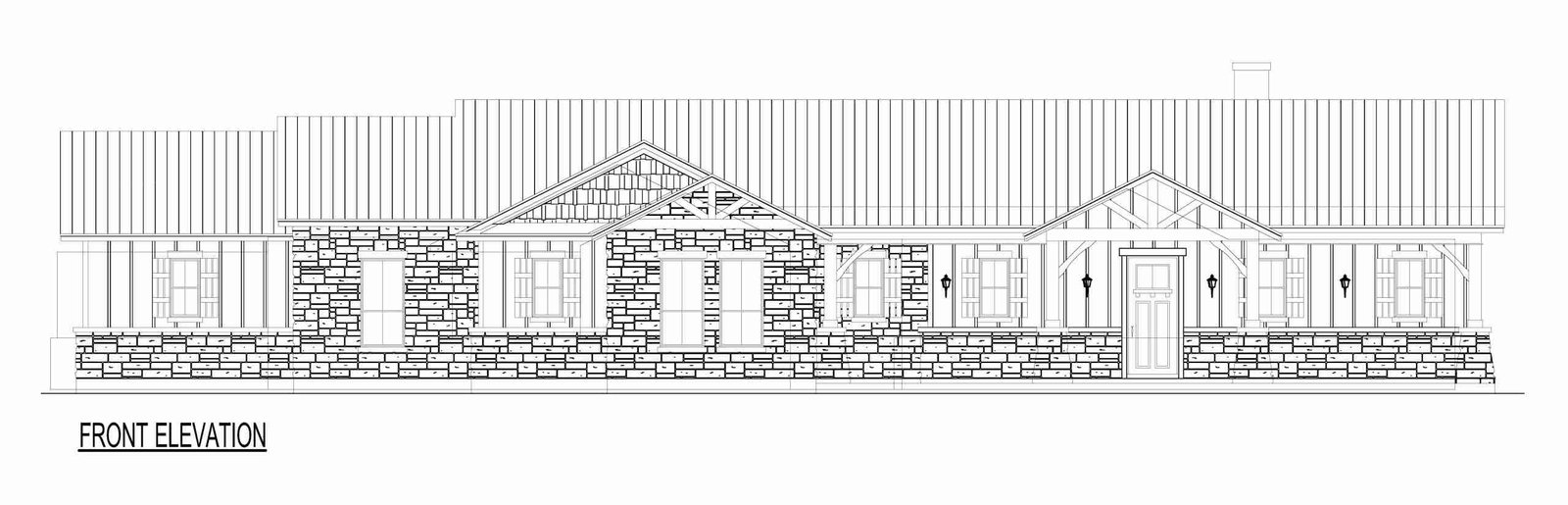
Plan 240-0070: Front Elevation
Rear Elevation
The rear elevation shows the back side of the house and typically includes features like patio or deck doors, rear-facing windows, and any back porches, decks, or screened areas. If the home has a walk-out basement or is built on a slope, this drawing also shows how the foundation relates to the ground—often revealing more of the foundation wall at the rear. While homeowners sometimes overlook the rear elevation, it’s important for visualizing the backyard view and any tall rear-facing walls. It also highlights roof elements that extend over rear spaces, including dormers or gables on the back side of the roof.
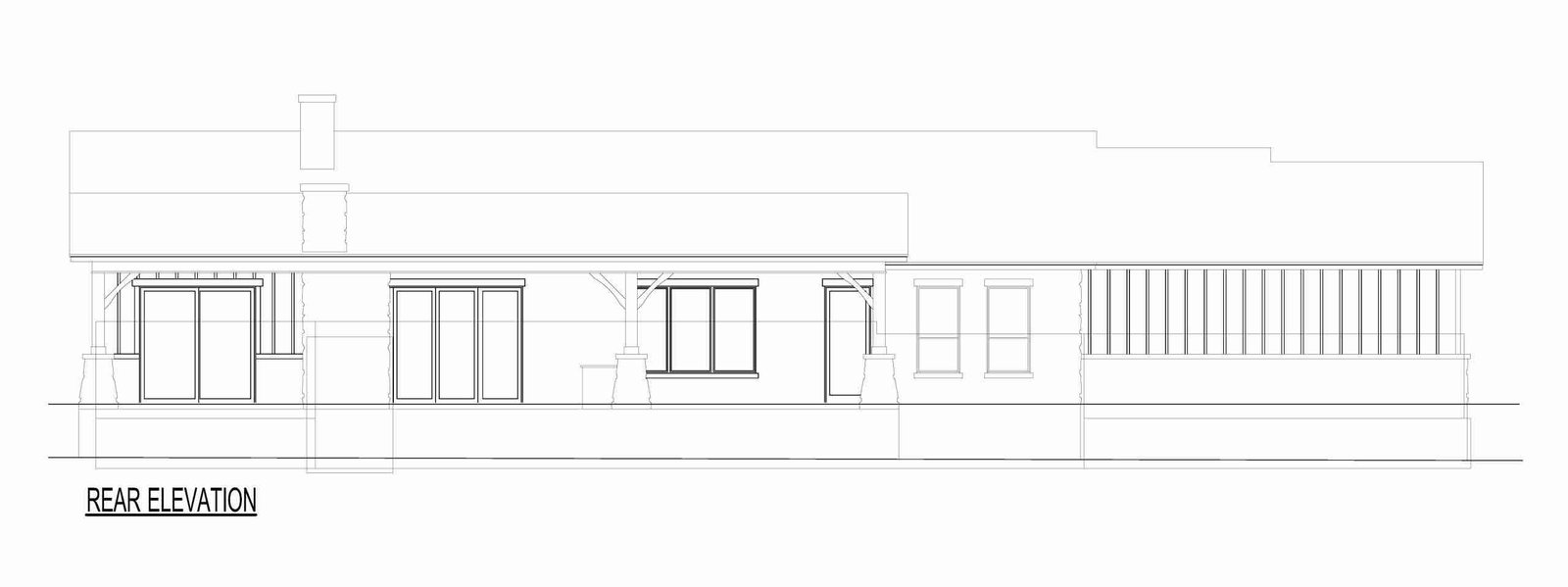
Plan 240-0070: Rear Elevation
Left and Right Side Elevations
The side elevations, typically labeled as “Left Elevation” and “Right Elevation,” depict the ends of the home as viewed from either side. The designation of “left” or “right” is based on the observer’s perspective when facing the front of the house. These side views illustrate features such as side-facing windows, any side-entry doors (like a side garage door or side porch), and the roof’s profile, including its pitch and any overhangs. One side elevation may display the outline of a chimney or the side of a fireplace box that protrudes. The other side might reveal a garage’s side wall, which could include an additional window or exterior door.
If the front garage has two or three bays, the side elevation will clarify how the garage roof connects to the main structure. Side elevations are essential for assessing aspects like wall height—particularly if one side features a high gable—and for determining the placement of utilities or AC units to keep them less visible. Architects often keep these side designs simpler; however, they must still be accurately drawn and annotated for construction purposes. Both the left and right elevations will indicate the roof slope and any windows or vents on those sides, as well as the finished ground line.
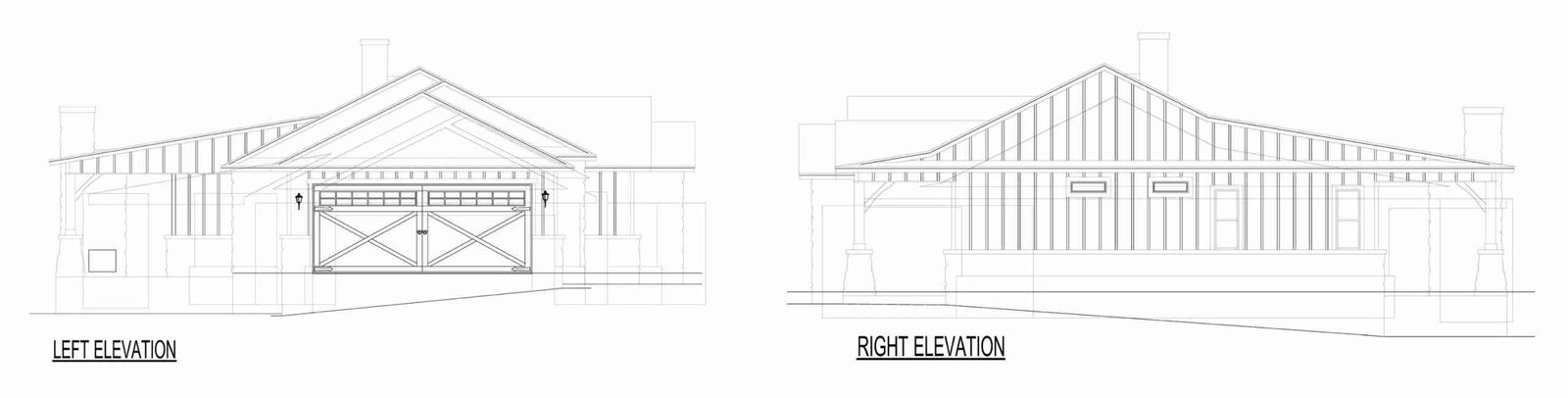
Plan 240-0070: Left and Right Elevations
Interior Elevations: Construction Elevation Room Drawings
In addition to exterior elevations, many architectural plan sets include interior elevation drawings. An interior elevation is a straight-on, scaled drawing of an interior wall or arrangement—such as a kitchen wall with cabinets or a bathroom vanity wall. These drawings are often referred to as construction elevation room drawings or simply interior elevations.
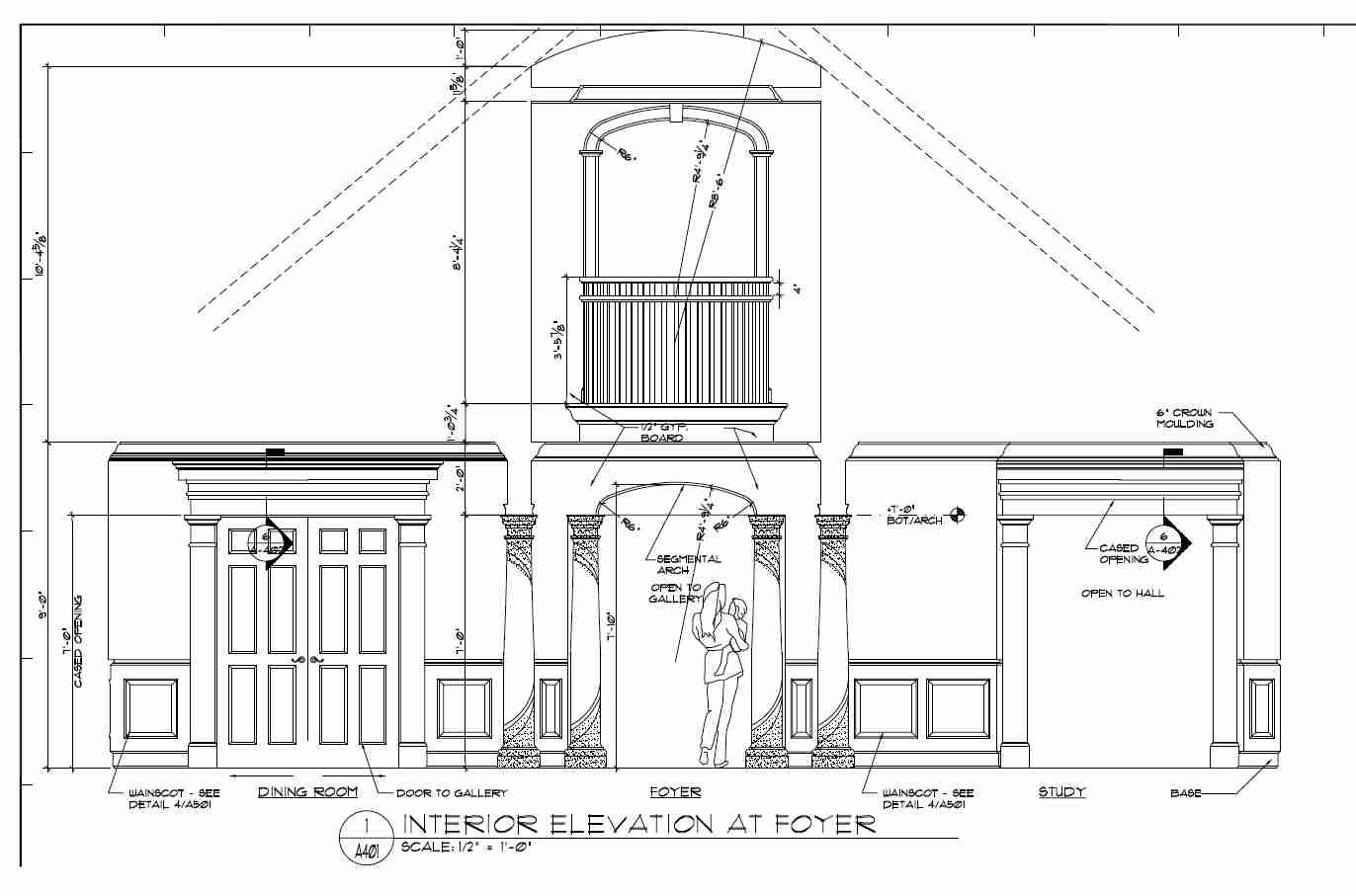
Plan 400-0002: Interior Elevation at Foyer
While floor plans provide a layout of spaces like kitchens or bathrooms, they cannot adequately show what the cabinetry, appliances, and finishes will look like on the walls. This is where interior elevations come into play. They are orthographic projections of interior spaces that flatten the view of a room’s wall, allowing you to see the height and placement of elements such as cabinets, countertops, mirrors, shelving, lighting, and more.
Common interior elevations included in a home plan set may consist of:
- Kitchen Cabinet Elevations: Each wall of the kitchen showing layouts, appliances, and hood design
- Bathroom Elevations: Vanity and mirror layout, tile patterns, and shower wall features
- Fireplace Wall Elevations: Mantel, built-ins, and surround details
- Other Built-In Features: Mudroom cubbies, media centers, and custom shelving
Builders and contractors depend on room-specific elevation drawings during construction to ensure finishes are installed correctly. For instance, an interior elevation will specify the exact height for mounting chair rail molding, the alignment of decorative tiles in a shower, or the arrangement of shelving in a closet. Without these detailed elevations, such specifics may be left open to interpretation or left to on-site decisions, which can result in mistakes or inconsistencies.
By creating comprehensive room elevations in advance, the design team can identify and resolve potential issues early on. This proactive approach ensures that, for example, a pendant light aligns appropriately with a centered island, or that a tall cabinet does not obstruct part of a window. It is often stated that designing interior elevations before construction leads to a smoother project, as it enhances visualization, communication, and problem-solving by addressing potential issues on paper rather than in the field.
Conclusion
In this article, we discussed what an elevation drawing is—specifically, a two-dimensional, scaled view of a building’s side. We explored the purpose of these drawings, which is to effectively communicate design and guide construction without distortion. We also covered the different types of elevations you may encounter: front, rear, side exterior elevations, as well as interior room elevations for detailed areas. Understanding how floor plan and elevation drawings work together gives you a fuller picture of what your future home will look like, both inside and out.
Elevation drawings may appear to be simple line diagrams, but they contain a wealth of information for anyone involved in home building. For homebuyers reviewing house plans, understanding elevations is essential for visualizing the home’s exterior style and interior details. For architects and designers, elevations serve as the intersection of creative vision and engineering practicality—a flat canvas to design beautiful facades while ensuring that everything fits together. For builders, these drawings are crucial guides that answer the question, “What are we building here?” at every stage of the construction process.