



Back to Articles
Colonial House Plans: Classic American Home Design

House Plans Online
October 18, 2025
Colonial house plans have been a cornerstone of American home design for centuries. Known for their symmetry, craftsmanship, and practical layouts, these homes balance European influence with early American practicality. Built from wood, brick, or stone, they feature centered doors, evenly spaced windows, and a clean, rectangular form that remains efficient and visually balanced.
Today’s Colonial-style homes preserve those traditional exteriors while adapting interiors for modern living—open layouts, larger kitchens, and family-friendly spaces that maintain the elegance and order this style is known for.
Historical Overview of the Colonial Style
Colonial architecture began in the 1600s and 1700s as settlers adapted European house forms to local materials and climates. Early homes were simple, box-shaped, and heated by large central chimneys. As the colonies grew, Georgian and Federal influences introduced balanced facades, gabled roofs, and classical trim.
The Colonial Revival movement of the late 1800s renewed interest in these traditional homes, reinterpreting their details with modern construction. That revival helped make Colonial homes a lasting symbol of American heritage—one that continues to inspire new house plans today.

Colonial House Plan 101-0020
Exterior Features of Colonial Homes
Colonial homes are identified by their symmetrical form, practical proportions, and restrained detailing. Each exterior element reflects the construction priorities of early American builders—durability, efficiency, and clear organization of space.
Symmetrical Form and Roof Design
The overall shape of a Colonial home follows simple geometry and balance.
- Rectangular or square footprint with a centered front entry
- Evenly spaced windows aligned across both stories
- Two-story structure with consistent room layout
- Steep side-gabled or hipped roof for water and snow runoff
- Dormer windows providing light to upper rooms or attic areas
Chimneys and Entrances
Both heating function and symmetry influenced the placement of Colonial chimneys and entryways.
- Early homes featured a single central chimney for efficient heating
- Later Georgian designs used twin end chimneys for visual balance
- Centered front door often framed by pilasters or columns
- Decorative elements such as pediments, sidelights, or fanlights were common in formal designs
Windows and Materials
Windows and building materials were selected for climate and availability.
- Multi-pane sash windows (commonly six-over-six) positioned symmetrically
- Shutters originally built for weather protection and security
- Wood clapboard or shingles prevalent in northern colonies
- Brick and stone construction more common in southern and mid-Atlantic regions
- Exterior colors traditionally neutral, including white, cream, gray, or natural brick tones
Trim and Decorative Details
Colonial detailing is based on classical principles and restrained ornamentation.
- Dentil molding along eaves or cornices
- Corner pilasters to frame exterior walls
- Cornice returns completing the gable ends
- Overall emphasis on symmetry and proportion consistent with Georgian influence
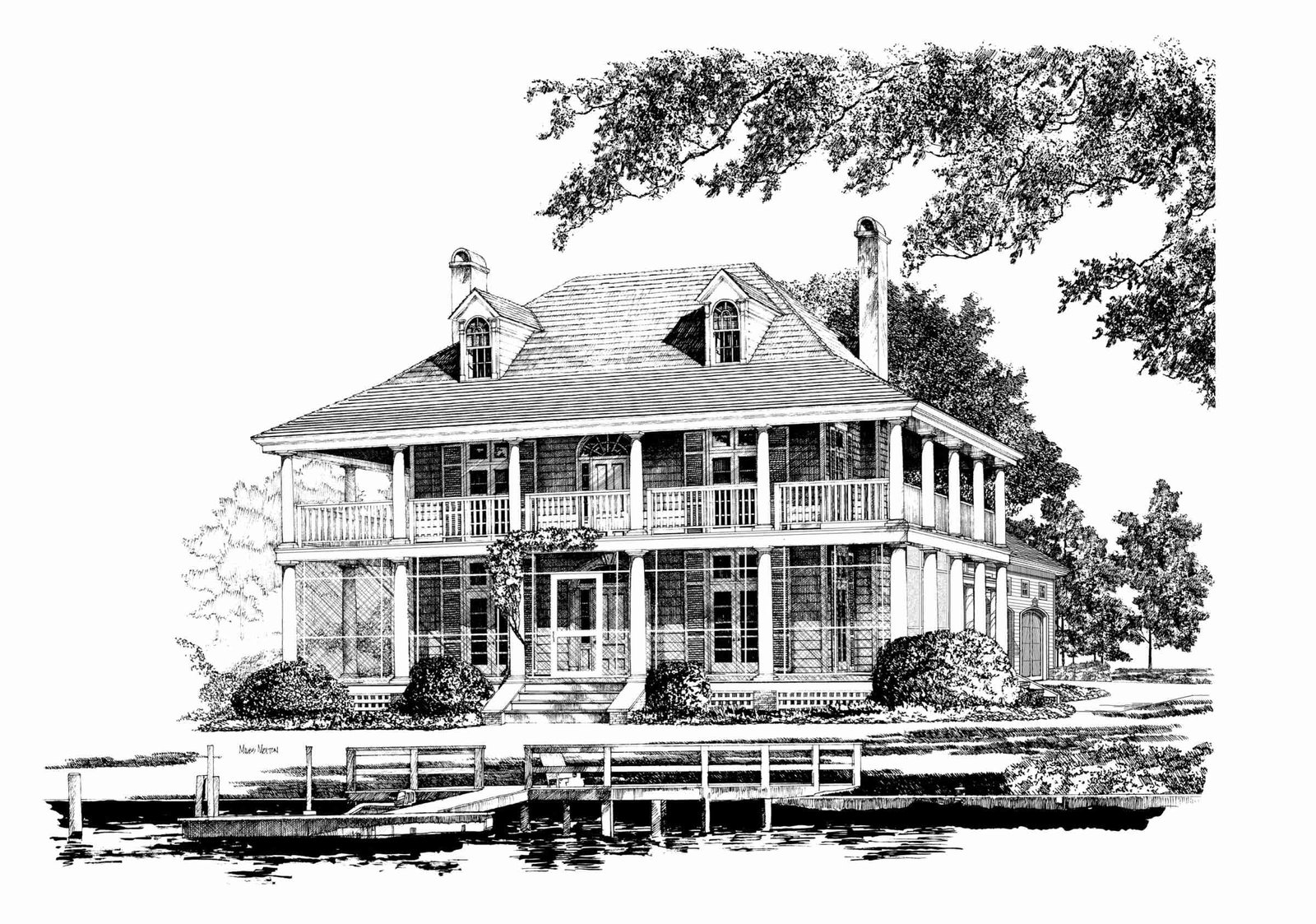
Colonial House Plan 400-0003
Interior Features of Colonial Homes
The interior of a Colonial home mirrors the symmetry and organization of its exterior. Floor plans are straightforward and functional, emphasizing proportion, circulation, and defined spaces for specific uses.
Floor Plan and Circulation
Most Colonial homes follow a central-hall plan that divides the structure into equal sections.
- Central hallway or foyer running from front to back of the home
- Staircase typically located in the entry hall or along the central axis
- Four-over-four plan common in two-story designs, with four main rooms on each level
- Clear separation of rooms for cooking, dining, and entertaining
- Logical flow between spaces, providing both efficiency and privacy
Fireplaces and Heating
Fireplaces were central to Colonial interiors, serving as both heat sources and focal points.
- Large brick or stone fireplaces located in main living areas
- Multiple fireplaces often present—living room, dining room, and upper bedrooms
- Simple wood mantels and hearth surrounds reflecting regional materials
- Chimney placements aligned with exterior symmetry
Materials and Finishes
Interior finishes in Colonial homes were durable and locally sourced.
- Hardwood flooring such as pine, oak, or maple
- Plaster or wood-paneled walls, often with decorative trim
- Wainscoting used in dining areas for wall protection and visual interest
- Ceiling beams or crown moldings depending on regional style and craftsmanship
- Paint colors and stains generally muted, reflecting available pigments of the era
Staircases and Woodwork
Wood detailing provided structure and decoration throughout Colonial interiors.
- Staircases constructed of hardwood, often featuring turned balusters and square newel posts
- Handrails and trim finished in natural or stained wood
- Paneled doors and window casings with simple, rectangular profiles
- Consistent millwork throughout to maintain visual order
Room Proportions and Function
Colonial interiors were organized for practicality and comfort.
- Living and dining rooms located at the front for light and accessibility
- Kitchens positioned at the rear, often with direct access to service areas
- Bedrooms arranged upstairs for separation from public spaces
- Ceiling heights were modest in early homes and increased in later Colonial Revival designs
Popular Variations of Colonial Home Plans
Colonial architecture includes several regional and cultural variations that developed during America’s settlement period and later revival movements. Each subtype reflects the building materials, climate, and traditions of the area in which it originated.
British Colonial (Georgian and Federal)
The British Colonial group includes the Georgian and Federal substyles that influenced much of early American architecture.
- Georgian designs feature formal symmetry, side-gabled roofs, and paired end chimneys.
- Exteriors often use brick or clapboard siding with a paneled central door framed by pilasters or columns.
- Federal designs that followed the Georgian era added refined details such as fanlight windows, slender columns, and decorative moldings.
- Both emphasize classical proportions and balanced room layouts.
Dutch Colonial
Dutch Colonial homes are best known for their distinctive gambrel roofs, which allow more usable space on the upper floor.
- Gambrel or barn-style roofs with flared eaves or overhangs
- Central front door and symmetrical facade
- Construction materials traditionally brick or stone in early examples
- Later Colonial Revival versions often include shed dormers for expanded second-story rooms
French Colonial
French Colonial homes developed in the Gulf Coast and Mississippi River regions, adapted to warm, humid climates.
- Raised foundations or piers for ventilation and flood protection
- Wide wraparound porches (galleries) or upper-level balconies for shade
- Tall windows and French doors for cross-ventilation
- Steep hipped roofs with dormers and decorative wrought iron railings
Spanish Colonial
Spanish Colonial homes reflect Mediterranean influence and were common in Florida, the Southwest, and California.
- Thick stucco or adobe walls for insulation in warm climates
- Low-pitched clay tile roofs (often red) and arched openings
- Wood beam ceilings and carved doors as interior accents
- Courtyards and verandas promoting indoor-outdoor living
New England Colonial
Two compact Colonial subtypes originated in New England: the Cape Cod and the Saltbox.
- Cape Cod homes are one to one-and-a-half stories with steep roofs, central chimneys, and minimal ornamentation.
- Saltbox homes have a long, sloping rear roofline—created by adding a lean-to at the back for extra space.
- Both styles use wood shingles or clapboard siding and maintain symmetrical facades suited for cold climates.
Tips for Selecting or Building a Colonial-Style House Plan
- Interior Layout: Choose between a traditional center-hall layout with defined rooms or a modernized version with open connections between living areas.
- Modern Features: Look for designs with expanded kitchens, primary suites, and functional spaces such as mudrooms or laundry rooms.
- Additions and Modifications: Keep additions proportional; locate garages or wings to the side or rear to preserve the home’s symmetry.
- Regional Adaptation: Select a subtype suited to your climate—steep roofs for northern regions, raised foundations and porches for warmer areas.
- Preserving Authentic Features: Retain defining elements such as a centered front door, balanced window placement, and traditional materials like wood, brick, or stone.
Conclusion
Colonial house plans remain a consistent presence in American residential design. Their rectangular form, balanced proportions, and efficient layouts have proven adaptable for both historic and modern construction.
Today’s Colonial homes retain their signature symmetry while integrating updated materials, open layouts, and energy-efficient features. The result is a design that continues to meet practical needs while preserving its architectural identity.