



Back to Articles
Bungalow Style House Plans: History, Features, and Modern Appeal

House Plans Online
August 8, 2025
Bungalow style house plans are known for their simple layouts, broad porches, and handcrafted details. They first became popular in the United States in the early 1900s and remain a favorite for homeowners who want a smaller, more efficient home. In this guide, you’ll learn how the style began, its main exterior and interior features, popular variations, and why bungalow house plans are still a practical choice for new construction today.
A Brief History of Bungalow House Plans
The bungalow began in 19th-century India as a small, one-story home with a thatched roof and a simple veranda. British colonists adapted the design for their own use, often adding larger porches for shade. By the late 1800s, the style had spread to England.
In the early 1900s, bungalows arrived in the United States. Builders in California developed them into low-profile homes with practical layouts and natural materials. The design focused on comfort, efficient use of space, and ease of construction.
Bungalows became popular nationwide because they were simple, comfortable, and affordable to build. Mail-order companies sold complete home kits with all the materials and instructions, making it possible for many families to own a house. Large numbers were built between 1900 and the 1930s, and many are still standing today.
These same qualities — straightforward design, functional layouts, and lower construction costs — continue to make bungalow house plans a practical choice for new homes.
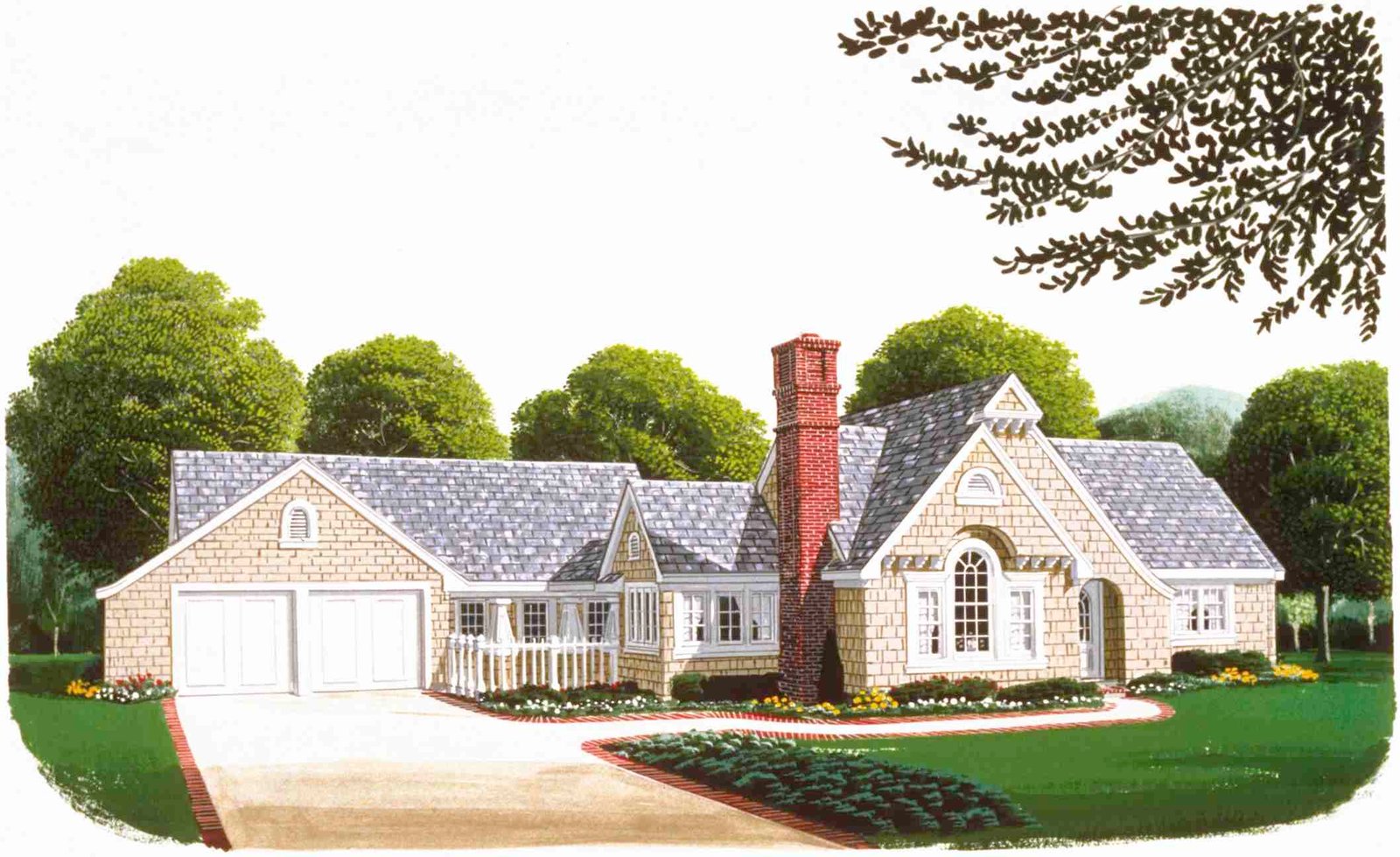
Plan 101-0001
Exterior Characteristics of Bungalow Homes
Bungalows are easy to recognize. They have a low, wide shape and a front porch that makes the home feel inviting. While details can vary, most share these features:
Low-Pitched Roof with Wide Eaves
- Low-sloping gable or hipped roof
- Roof extends past the walls to create wide eaves
- Eaves often include exposed rafters or decorative brackets
One or One-and-a-Half Stories
- Many bungalows are built as single-story homes
- Others have a half-story tucked into the roof space, adding extra rooms without a full second floor
- Dormer windows are often used to bring light and headroom to the upper level
Front Gables and Dormers
- A front-facing gable is common on bungalow exteriors, often positioned over the porch or main entry
- Dormer windows may be added to the roof to increase light and usable space in a half-story
Large Front Porch
- A wide, covered porch is a defining feature of most bungalows
- Porches may span the full width or a good portion of the house
- Tapered square columns are common and often rest on stone or brick piers
Natural Building Materials
- Bungalows often use materials that give a warm, handcrafted look
- Wood siding or shingles are common, with brick typical in the Midwest and stucco more common in California and the Southwest
- Stone accents are often used on porch piers, chimneys, or foundations to add texture and durability
- Colors are usually in natural, earthy tones that suit the surrounding landscape
Multi-Pane Windows
- Many bungalows have double-hung windows with several small panes in the upper sash over a single pane in the lower sash
- Grouped windows are common, allowing more light into living spaces
- These designs often reflected the Arts and Crafts influence popular in 1920s bungalow-style homes
Prominent Chimneys and Details
- Many bungalows feature a large brick or stone chimney serving as an exterior focal point
- Exposed beams, braces, and gable-end woodwork are common decorative elements

Plan 200-1001
Interior Characteristics of Bungalow Homes
Bungalow interiors make the most of a smaller footprint with layouts that are practical and easy to live in.
Open Floor Plan
- Living and dining areas are often connected in the same open space
- Large openings or archways between rooms help the home feel bigger without adding square footage
Modest Size and Layout
- Most bungalows have two or three bedrooms on the main floor, along with a single bathroom in older designs
- Bedrooms are often located off a short hallway near the main living areas
- Some include a small half-story or attic for an extra bedroom or storage
- The compact footprint keeps all main living spaces close together, making the home easy to navigate and maintain
Built-In Furnishings and Woodwork
- Many bungalows include built-in features such as bookcases, window seats, or dining room buffets
- These elements are often made of natural wood like oak or pine and left stained rather than painted
- Built-ins save space, reduce the need for extra furniture, and highlight the craftsmanship common in early 20th-century homes
Fireplace as a Focal Point
- A brick or stone fireplace is often centered in the main living room
- The mantle might be flanked by built-in glass-front bookcases or windows
Simple, Functional Design
- Interiors favor simplicity, with style coming from quality materials and sturdy design rather than excessive decoration
- Walls often have plain plaster finishes or wood paneling such as wainscoting or picture rails
- Hardwood floors are common, and materials are chosen for durability and easy upkeep
Access to Outdoor Spaces
- Large windows bring in natural light and provide ventilation
- Multiple doors may open to a front porch, side porch, or back patio
- Layouts often make it easy to move between indoor and outdoor living spaces
Bungalow Styles and Regional Variations
The Craftsman bungalow is the most recognized version of this style, but many regional and stylistic variations developed in the early 20th century.
Craftsman Bungalow
- Influenced by the Arts and Crafts movement
- Emphasizes natural materials, exposed rafters, and built-in woodwork
- Found nationwide, not limited to a specific region
California Bungalow
- Regional subtype popular in California from the 1910s to the 1930s
- Often Craftsman in style but may include Mission or Prairie influences
- Usually one to one-and-a-half stories with low-pitched gable roofs and deep porches
- Stucco or wood siding is common
Chicago Bungalow
- Brick construction with 1½ stories above a raised basement
- Low-pitched hipped roof
- Rectangular footprint designed for narrow city lots
- Widely built between the 1910s and 1920s
Mission (Spanish) Bungalow
- Combines bungalow form with Spanish Colonial Revival details
- Stucco walls, arched openings, and red clay tile roofs
- Common in California and the Southwest
Tudor Bungalow
- Bungalow layout paired with Tudor Revival design elements
- Steeply pitched roofs and half-timbered walls
- Seen in early 20th-century neighborhoods
Prairie Bungalow
- Influenced by the Prairie School architectural style
- Strong horizontal lines and low hipped roofs with deep overhangs
- Ornamentation is minimal
- Most common in the Midwest
Airplane Bungalow
- Standard bungalow base with a small, central “pop-up” second story
- Surrounded by windows for light, ventilation, and views
- Name comes from the resemblance to an airplane cockpit
Why Bungalow House Plans Remain Popular
Bungalows remain a favorite choice for many homeowners because they combine practicality, comfort, and efficient design.
- One-Level Living – Easy to navigate for all ages and ideal for those who want to avoid stairs
- Cozy Character and Craftsmanship – Many feature vintage details, quality woodwork, and built-ins that give the home personality
- Lower Construction and Maintenance Costs – Smaller footprints use fewer materials and are easier to maintain
- Efficient Floor Plans – Layouts make good use of every square foot, with minimal wasted space
- Welcoming Front Porches – Create an inviting entry and offer space to relax and connect with neighbors
- Privacy-Friendly Design – Low rooflines and single-story layouts reduce visibility from neighboring homes
Bungalows have evolved from modest early 20th-century homes into a style that still appeals to modern homeowners. Their practical layouts, comfortable size, and distinctive character make them well-suited for a range of lifestyles and locations. If you’re thinking about a bungalow for your new home build, a well-designed bungalow house plan offers an appealing balance of efficiency, craftsmanship, and charm that works just as well today as it did a century ago.