



Back to Articles
Contemporary House Plans: Style Overview and Key Features

House Plans Online
July 10, 2025
Contemporary house plans are a top choice among American homeowners and builders, thanks to their emphasis on clean design, open layouts, and modern materials. These homes often feature sleek exteriors with expansive windows and interiors filled with natural light. The style prioritizes functionality, simplicity, and the innovative use of space and materials.
What Are Contemporary House Plans?
Contemporary house plans are best understood as a reflection of current trends in residential design. Unlike traditional styles that follow a fixed set of architectural rules, contemporary design is defined by its flexibility, evolving with changing tastes, lifestyles, and building technologies. A contemporary home built today may look quite different from one built a decade ago.
While often confused with modern architecture, contemporary design is more adaptable. “Modern” refers to a specific mid-20th-century movement, while contemporary homes freely borrow elements from various styles—Craftsman detailing, industrial materials, or minimalist layouts—blending them into designs that feel fresh, functional, and of the moment.
A Brief History and Evolution of Contemporary Style
Contemporary residential architecture traces its roots to the mid-20th century, when designers began to move away from traditional home styles that had dominated earlier decades. After World War II, architects embraced modernist ideals of simplicity, openness, and functionality—often summed up by the “less is more” philosophy. Homes from the 1950s and 1960s began to feature open floor plans, geometric shapes, and clean, unadorned surfaces.
While early contemporary homes overlapped with mid-century modernism, the style quickly branched out. By the 1970s, “contemporary design” described a fusion of influences rather than a strict set of rules. Unlike fixed styles like Colonial or Victorian, contemporary homes evolved with changing materials, cultural trends, and lifestyle needs.
In the following decades, advances in construction—such as steel framing, engineered wood, and large-pane glass—enabled more open, light-filled spaces. At the same time, sustainable design became more prominent, with eco-conscious features increasingly built into contemporary homes. By the 2000s and 2010s, the style had become known for its efficient layouts, green materials, and bold curb appeal.
Today, contemporary house plans are one of the most popular categories for new builds in the U.S. Whether designed as sleek minimalist cubes or transitional homes with subtle modern touches, they all reflect the aesthetics, technology, and priorities of the present day.
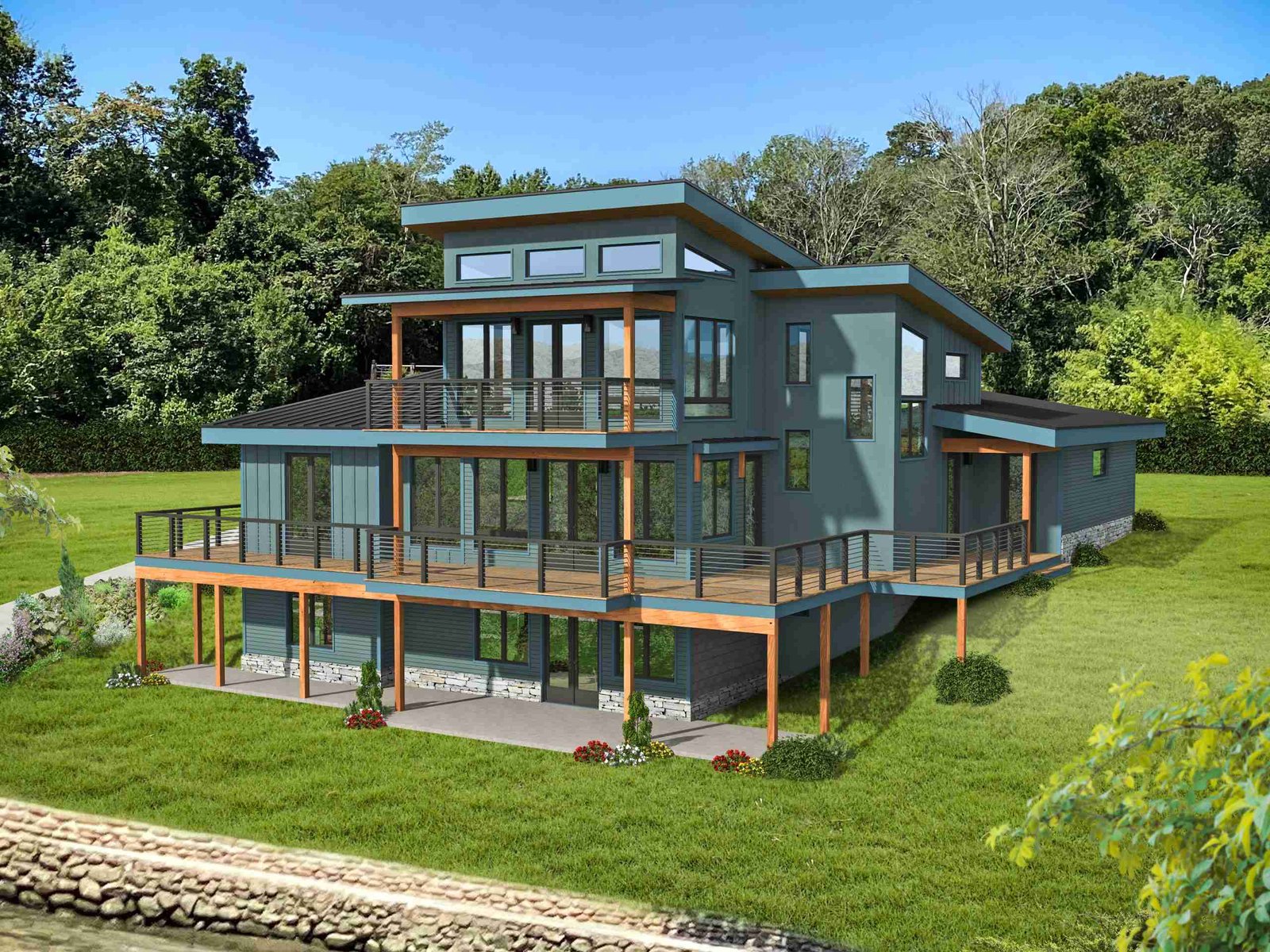
Contemporary House Plan 630-0018
Exterior Features of Contemporary Homes
Contemporary home exteriors are immediately recognizable by their clean, geometric lines and lack of excessive ornamentation. The overall look is simple yet striking. Here are the key characteristics commonly found in contemporary house plans:
Distinctive Rooflines
Many contemporary homes feature unconventional roof designs that define their modern appearance:
- Flat or low-pitched roofs that create a clean, boxy silhouette
- Shed roofs and cantilevered overhangs that add visual interest
- Angular roof forms that emphasize the home’s geometric character
- Shallow-pitched roofs are hidden behind parapets to maintain a minimalist profile
These rooflines contribute to the bold, streamlined look of contemporary exteriors.
Asymmetry and Form
Contemporary homes often break away from traditional symmetry, using shape and layout to create visual interest:
- Asymmetrical facades that depart from balanced, mirror-like designs
- Unconventional forms, such as varying roof heights or shifted volumes
- Modules or sections that jut out, creating depth and contrast
These choices give contemporary exteriors a bold, distinctive presence.
Expansive Windows and Natural Light
Large windows are a defining feature of contemporary home exteriors, enhancing both aesthetics and livability:
- Floor-to-ceiling glass that creates a dramatic, modern appearance
- Broad picture windows or entire glass walls that open up the façade
- Glass elements around entryways, such as full-height sidelights
- Sliding or folding glass doors that connect interior spaces to patios or decks
Together, these features prioritize natural light and strengthen the indoor-outdoor connection.
Mix of Modern Materials
Contemporary exteriors often combine materials like concrete, glass, stucco, metal, wood, and stone to create contrast and texture. These finishes are typically left exposed and used to highlight their natural texture and finish. Cool materials like steel or cement board are often balanced with warm wood accents. Neutral color palettes—whites, grays, and earth tones—complement the home’s geometric form and understated style.
Minimal Ornamentation
Contemporary homes emphasize clean detailing that highlights the form and materials of the structure rather than decoration. Features like shutters, ornate trim, or classical columns are typically avoided. Instead, accents such as a simple canopy or pivot door may be used sparingly to enhance the overall design. The result is an exterior that feels modern, intentional, and visually balanced.
Emphasis on Outdoor Living
Contemporary house plans are designed to connect indoor and outdoor spaces seamlessly. Large sliding or folding glass doors often open to patios, decks, or courtyards, extending the living area. Many designs include built-in outdoor features like covered porches, rooftop terraces, or interior courtyards. Landscaping tends to be minimalist, using native plants, hardscaping, or even green roofs. In warmer regions, open transitions to pool decks or verandas make outdoor living a key part of daily life.
While contemporary homes share common traits, their exteriors can vary widely. Some lean toward ultramodern and futuristic, while others reinterpret traditional elements—like brick or gable roofs—with modern proportions and minimalist detailing. No matter the variation, contemporary exteriors are typically bold, uncluttered, and thoughtfully designed to connect with their surroundings.
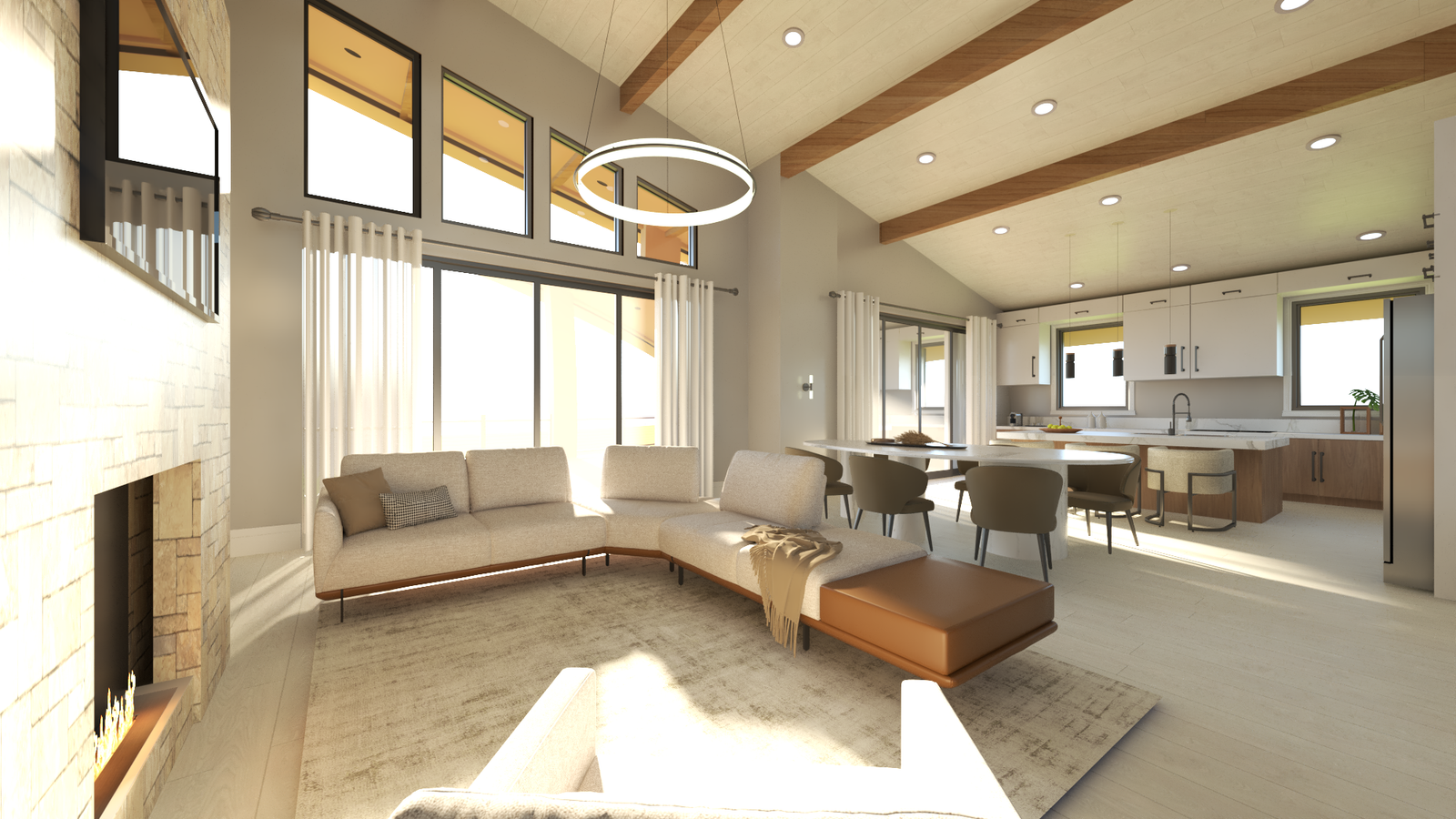
Contemporary House Plan 580-1035
Interior Design and Layout in Contemporary Homes
Stepping inside a contemporary-style home, you’ll immediately notice the sense of openness and light. Contemporary interiors are designed to be informal, comfortable, and highly functional for modern living. Key interior characteristics include:
Open Floor Plans
Open-concept layouts are a hallmark of contemporary homes, designed to enhance natural light, flow, and connection:
- Living spaces flow together, with the kitchen, dining area, and great room often sharing one continuous area
- Minimal interior walls and doorways improve sightlines and communication
- Natural light travels freely, making rooms feel larger and more inviting
This layout supports everyday living, entertaining, and a stronger sense of openness throughout the home.
Indoor-Outdoor Connection
Contemporary interiors often create a strong visual and physical connection to the outdoors:
- Expansive windows and glass doors bring in abundant natural light
- Living areas frequently open to patios or decks, extending usable space
- Outdoor views become part of the interior environment, adding depth and calm
- High or double-height ceilings enhance the home’s open feel
These features reinforce the style’s emphasis on light, flow, and indoor-outdoor harmony.
Clean, Minimalist Décor
Contemporary interiors embrace a “less is more” approach, focusing on clean lines and purposeful design:
- Smooth, uncluttered surfaces with minimal trim or detail
- Neutral color schemes like white, gray, and beige are used to ground the space
- Low-profile, streamlined furniture that emphasizes shape and function
- Intentional focal points, such as a bold staircase, large artwork, or a modern fireplace
This minimalist approach highlights light, space, and structure—while also simplifying maintenance.
Functional and Flexible Spaces
Contemporary homes prioritize flexibility, with layouts that adapt to changing needs. A den may double as a home office, or a guest room might serve as a creative space. Some plans include movable partitions or sliding panels for reconfigurable layouts. Storage is typically built-in and minimal, preserving the home’s clean, open feel. These layouts support casual, everyday living while remaining ideal for entertaining and gatherings.
Private Retreats
While contemporary homes emphasize open, social spaces, they also value privacy where it matters. Many contemporary house plans use a split-bedroom layout, placing the primary suite on the opposite side of the home or a different level. This creates a retreat-like atmosphere, often enhanced by large windows, minimalist finishes, and spa-style bathrooms. In two-story homes, main-floor primary suites are a popular option for convenience and aging-in-place flexibility.
Open, Functional Kitchens
Kitchens in contemporary homes are open, social spaces with a clean, streamlined aesthetic:
- Open to main living areas, encouraging connection and easy entertaining
- Flat-panel cabinetry and simple-edge countertops for a minimalist look
- Stainless steel or paneled appliances that blend seamlessly into the design
- Large kitchen islands with bar seating, serving as central gathering points
Spa-Inspired, Minimalist Bathrooms
Contemporary bathrooms echo the home’s clean lines and focus on comfort:
- Floating vanities and frameless glass showers for a sleek, open feel
- Freestanding tubs that emphasize simplicity and elegance
- Geometric shapes and quality materials are used for both function and visual appeal
Technology Integration
Contemporary homes often include built-in smart features that enhance convenience without disrupting the clean aesthetic. You’ll commonly find programmable lighting, smart thermostats, security systems, and whole-home audio—controlled via discreet panels or mobile apps. These systems are designed to be unobtrusive, with hidden wiring and streamlined interfaces that align with the home’s modern look and lifestyle.
The interior of a contemporary home feels bright, open, and comfortable. The design emphasizes quality over quantity—creating homes that are simple, elegant, and perfectly suited to modern living.
Why Are Contemporary House Plans So Popular?
Contemporary house plans are in high demand for practical, lifestyle-driven reasons:
- Open layouts support casual living, entertaining, and better flow between kitchen, dining, and living spaces
- Natural light from large windows improves interior brightness and provides strong outdoor views
- Clean, modern aesthetics offer broad appeal and allow for easy personalization through furniture and finishes
- Low-maintenance finishes like metal, fiber cement, and concrete are durable and easy to clean
- Energy efficiency is built in, with high-performance windows, modern insulation, and HVAC systems
- Modern appearance that stays current longer and doesn’t date as quickly as traditional styles
Contemporary house plans evolved from a break with traditional styles and have become a versatile, adaptable option for a wide range of homeowners. Whether you’re drawn to their bold architecture, light-filled interiors, or focus on efficiency, contemporary homes offer a modern design that’s built to grow with your lifestyle.