



Back to Articles
One-Story vs. Two-Story House Plans: Cost, Comfort, and Convenience

House Plans Online
February 4, 2026
Choosing between a one-story and a two-story house plan is a significant decision that affects your future home’s design, cost, and daily functionality. Whether you’re building a new home or looking for the perfect blueprint to suit your lifestyle, understanding the nuances of each layout is crucial for long-term satisfaction.
One-Story vs. Two-Story: Comparison Highlights
- Actual Living Space: One-story homes provide more usable square footage because they don’t lose roughly 100–200 square feet to staircases.
- Accessibility: One-story homes offer the best “aging-in-place” design with no stairs to navigate.
- Privacy: Two-story homes provide better vertical separation between social areas and bedrooms.
- Land Use: Two-story plans have a smaller footprint, allowing for a larger yard on narrow or expensive lots.
- Construction Cost: Two-story homes are generally more budget-friendly to build per square foot because they require less foundation and roofing.
Space Efficiency and the Lot Footprint
Space efficiency is a top priority for most homeowners. How you utilize your land can greatly influence your living experience, especially if you are dealing with a compact urban lot where every square foot counts.
The Case for One-Story Living
One-story homes, often called ranch-style homes, offer a seamless flow. The open floor plans typical of these designs make interiors feel more spacious, and the lack of vertical division allows for a more cohesive, integrated environment.
The Case for Two-Story Living
Two-story homes allow you to build “up” rather than “out.” This is a massive advantage in areas where land is expensive. By stacking levels, you maximize your living space on a smaller footprint, leaving more room for a garden, pool, or outdoor entertaining area.

Modern Farmhouse Plan 288-0242
Architectural Style and Curb Appeal
The architecture of your home reflects your personal taste and how the building integrates with its surroundings.
One-Story Aesthetics
From traditional bungalows to modern minimalist layouts, one-story homes often feature large windows and sliding doors to enhance natural light. Their simple rooflines often lead to lower long-term maintenance costs and a timeless, approachable curb appeal.
Two-Story Versatility
Two-story homes offer more dramatic architectural opportunities. The added height allows for high ceilings, grand facades, and balconies. This vertical dimension provides a “stately” look that can increase resale value and allow for creative interior design themes that vary from floor to floor.
Construction Costs: Foundation vs. Framework
While it may seem counterintuitive, two-story homes are typically more affordable to build per square foot. Because a one-story ranch requires twice the foundation and twice the roofing material to cover the same living area, the “cost to build” is usually 10–15% higher. By “stacking” your square footage, a two-story plan allows you to maximize your construction budget while saving on the most expensive components of the house.
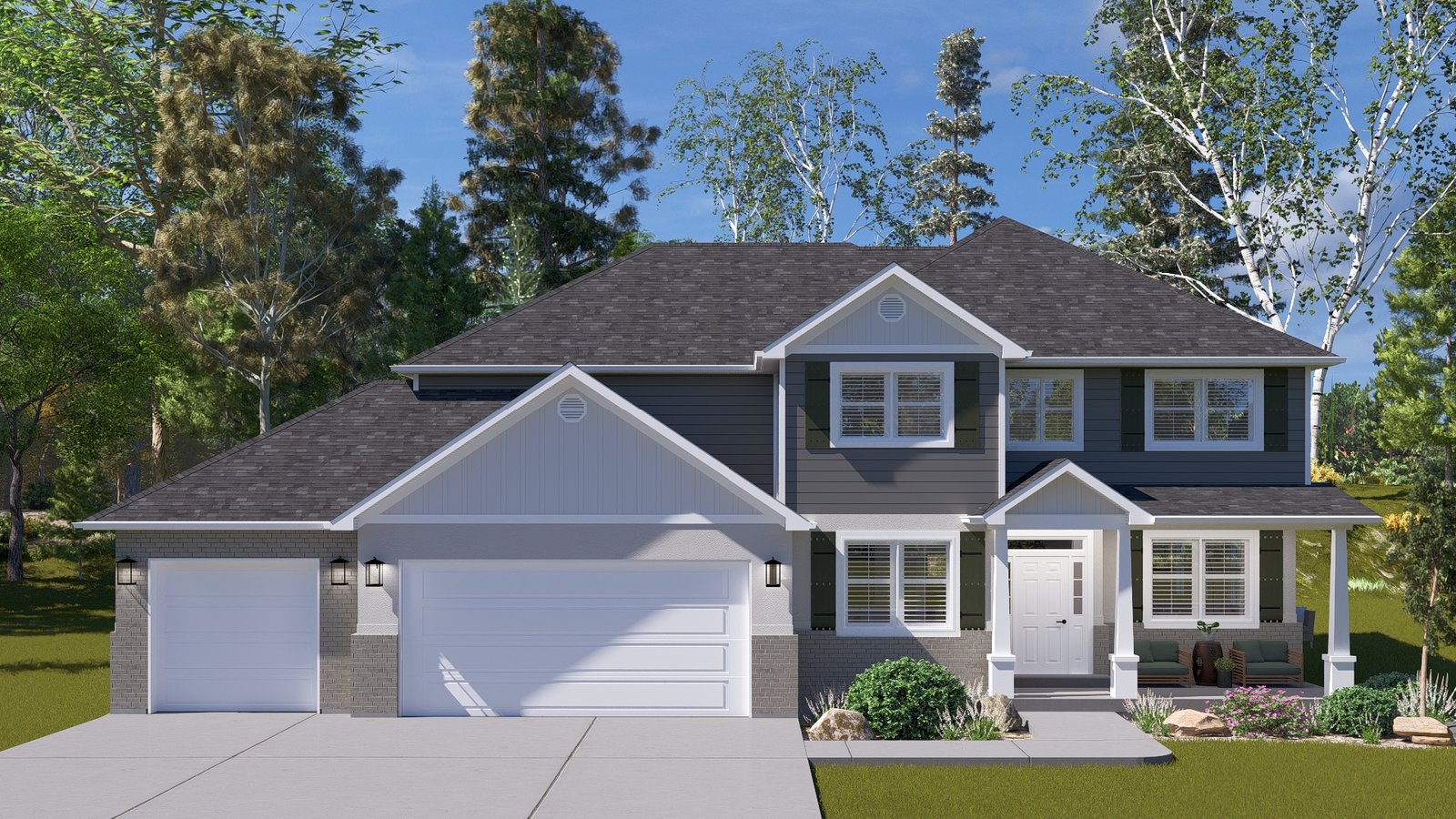
Traditional House Plan 288-0268
Daily Comfort and Lifestyle Trade-offs
Comfort is subjective, but it plays a massive role in which house plan will actually feel like “home.”
Convenience of Single-Level Living
One-story homes are prized for ease of maintenance. Cleaning is simpler, and the absence of stairs reduces the risk of accidents for families with toddlers or elderly members. This layout facilitates social interaction, as there are fewer physical barriers between family members. Maintenance like cleaning gutters or painting trim is also safer and cheaper on a single level.
The Staircase Trade-off
When comparing square footage for your lifestyle, remember the “hidden” space loss in multi-level homes. A standard staircase can consume 80 to 100 square feet of floor space. In a two-story home, you lose this usable area on both levels to accommodate the transition. A 2,000-square-foot one-story home often feels larger than a 2,000-square-foot two-story home because the entire footprint is dedicated to living space, not travel space.
Privacy and Specialized Spaces
Two-story homes excel at providing a quiet retreat. The separation of levels is ideal for large families or those who work from home. Having a home office or guest room on a separate floor from the main living area ensures that work and rest stay distinct.

New American House Plan 288-0223
Which House Plan is Right for You?
The choice between a one-story and a two-story house plan depends on your budget, your lot, and your vision for the future.
- Choose a one-story plan if you value accessibility, ease of maintenance, and want to avoid the “lost space” of a staircase.
- Choose a two-story plan if you want to maximize square footage on a smaller lot and prefer a clear separation between private and social spaces.
Frequently Asked Questions
Which option is more affordable to build?
Two-story homes are generally more affordable per square foot because they share a single foundation and roof over a larger living area. One-story homes require a larger footprint, making them more expensive to construct for the same amount of square footage.
Which layout is better for aging in place?
A one-story home is the gold standard for accessibility. Eliminating stairs makes the home safer and more comfortable for long-term residency as mobility needs change.
Do two-story homes have better resale value?
Both styles perform well, but they appeal to different markets. Two-story homes are highly sought after by growing families, while one-story homes are in high demand among retirees and “downsizers.”